Grieving in the Age of Social Media: Navigating Loss in a Connected World
Clinically reviewed and contributed to by Vitoria Cottiss, AMFT. Published December 8, 2025.

Mourning today often happens online. Grief used to be something private. Now, it can play out in real time, in front of hundreds of people.
The moment someone passes away, social media fills with photos, tagged memories, tribute posts, and condolences. Sometimes, it happens before their closest loved ones even have time to process the news.
Social media brings connection, but it can also bring overwhelm. In this article, you’ll learn how to balance both. We’ll cover how to cope with grief online, set digital boundaries, navigate online memorials, and find offline ways to heal.

How Does Social Media Support and Complicate the Grieving Process?
Social media can help you feel less alone when you’re grieving. It gives you a space to share memories, connect with others, and see just how much your loved one meant to the world.
But it can also make grief harder to manage.
The Upside:
- You get support quickly and easily.
- People share memories that you may not have known about.
- Online tributes can help keep your loved one’s memory alive.
The Downside:
- Posts and memories can hit you out of nowhere.
- Comments can feel intrusive or overwhelming.
- You may feel pressure to post about your grief, even if you’re not ready.
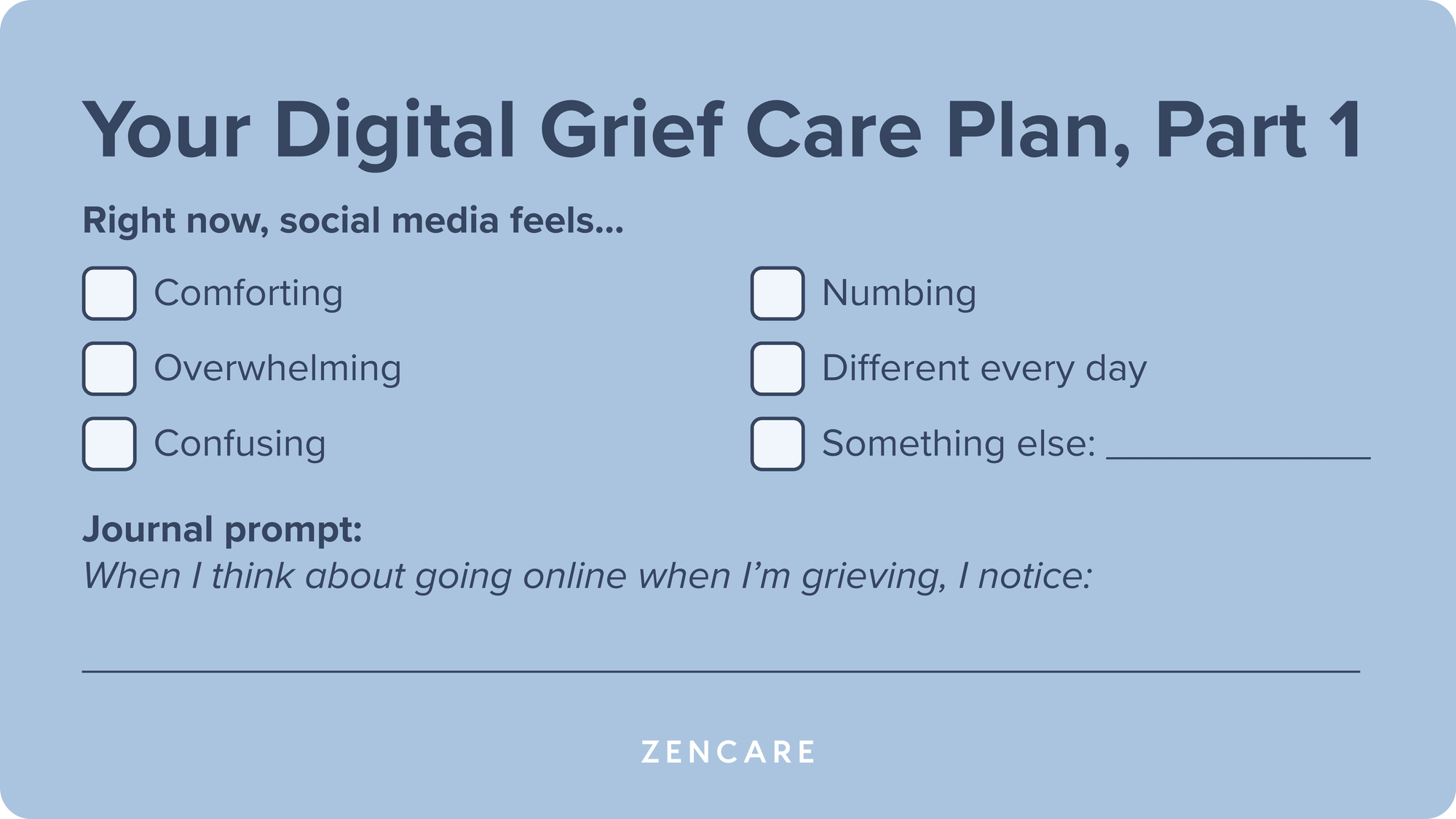
Coping with grief online can be both comforting and emotionally draining. It’s important to know when it’s helping and when it’s hurting.
Takeaway: Use social media for support when it helps, but know that it’s okay to take a step back when it feels like too much.
What’s the Right Way to Post (or Not Post) During Grief?
There’s no one right way to grieve online. If posting about your loss helps you process it, that’s okay. If you’d rather stay silent, that’s okay too.
Still, if you choose to post or respond to others’ posts, some digital etiquette can help make the process more respectful for everyone.
If You’re Posting:
- Pause and ask yourself why you’re posting. Are you looking for support or trying to honor the person?
- Get permission before posting personal photos or stories, especially if they involve other people.
- Speak from the heart. Your message doesn’t need to be perfect or profound.
If You’re Responding to Someone Else’s Grief:
- A simple, kind comment like “I’m so sorry for your loss” is enough.
- Avoid giving advice unless it’s asked for.
- Respect the emotional space people are creating by sharing.
Grief is deeply personal. Online grief boundaries help ensure that your posts and comments support healing, not hurt.
Takeaway: Whether you post or not, make sure it feels right to you and comes from a place of care, not pressure.
How Can You Set Healthy Digital Boundaries While Grieving?
To set healthy digital boundaries during grief, give yourself permission to control your online environment. You don’t have to be available to everyone or consume everything on your feed.
Social media can become overwhelming quickly, especially in the early stages of grief. Taking care of your emotional space is essential.
How to Set Boundaries:
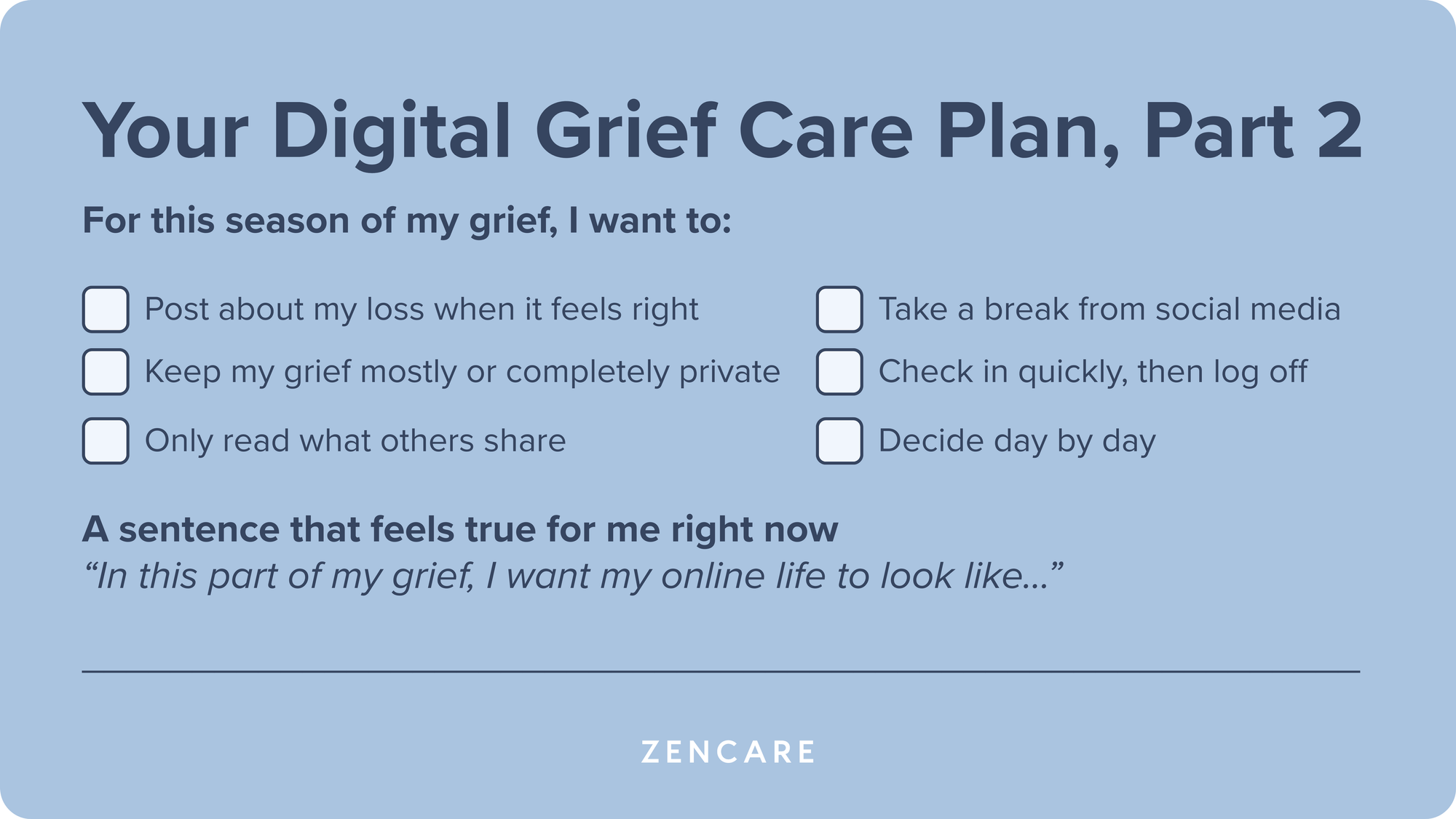
- Mute or unfollow accounts that bring up painful feelings, even if only temporarily.
- Use time limits on social apps to avoid endless scrolling.
- Create a private journal or locked account where you can post without pressure.
- Take a full break if needed. You don’t owe anyone an explanation for logging off.
- Step into nature before you step online.
- Put your phone in a box or a drawer.
- Curate your feed.
Your mental health matters. You have every right to create distance from content that is hard to process.
Takeaway: Digital boundaries are a form of self-care. You don’t have to stay online to prove that you’re grieving.
What Should You Do About Digital Triggers Like Anniversaries and Notifications?
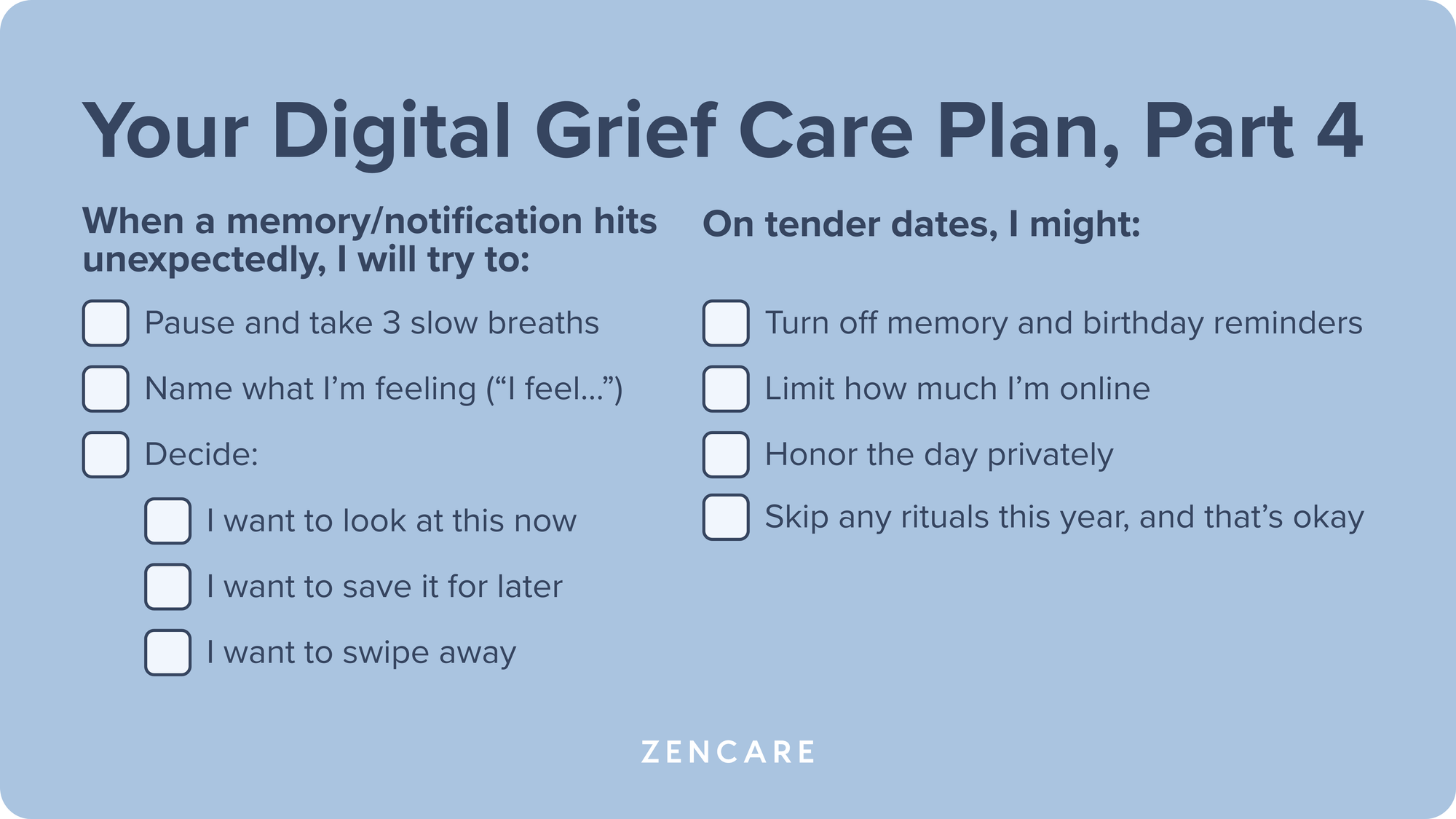
To manage digital grief triggers, start by adjusting your settings. You can turn off features that resurface painful memories when you’re not prepared for them.
Raise your hand if you’ve been personally victimized by “On This Day” reminders!
Grief doesn’t follow a calendar, but social media algorithms and even photo apps do. Birthdays, anniversaries, and “On This Day” memories can show up uninvited, and they can hit hard.
“A memory notification can appear in the middle of your workday and suddenly you’re back in a moment, take a pause and validate your feelings,” says Vitoria Cottiss, AMFT
What You Can Do:
- Turn off memory and birthday reminders on platforms like Facebook.
- Adjust tagging and timeline review settings to avoid surprise posts.
- Make a plan for how you want to approach certain dates. You can honor them privately or not at all.
- Create your own rituals offline. Light a candle, write a letter, or take time alone.
You don’t have to engage with every memory that pops up. And you don’t have to share your rituals online to make them meaningful.
Takeaway: You’re allowed to take control over how you remember. Not everything needs to be shared or acknowledged publicly.
Why Does Everyone Else’s Grief Look More Public or Emotional?
Because social media shows us only a small part of people’s grief, it can create the illusion that everyone else is mourning “better” or “more.”
It’s easy to fall into the trap of comparative or performative grief. You might feel like your sadness isn’t enough if you’re not posting. Or, you may feel like you have to show your pain online just so others know you care.
This isn’t true. Your grief is valid, even if no one sees it.
Comparing your process to others can make healing harder. And sharing only to meet expectations can leave you feeling disconnected from your own emotions.
Takeaway: You don’t need to prove your grief. What you feel is enough, even if you never post a word.
How Do You Grieve Offline and Get the Support You Actually Need?
To grieve offline, focus on real-world connections and routines that help you feel grounded. This kind of support is often more nourishing and sustainable than social media can offer.
You don’t have to share everything online to feel supported. In fact, many people find that their deepest healing happens away from screens.
Try These Offline Support Options:
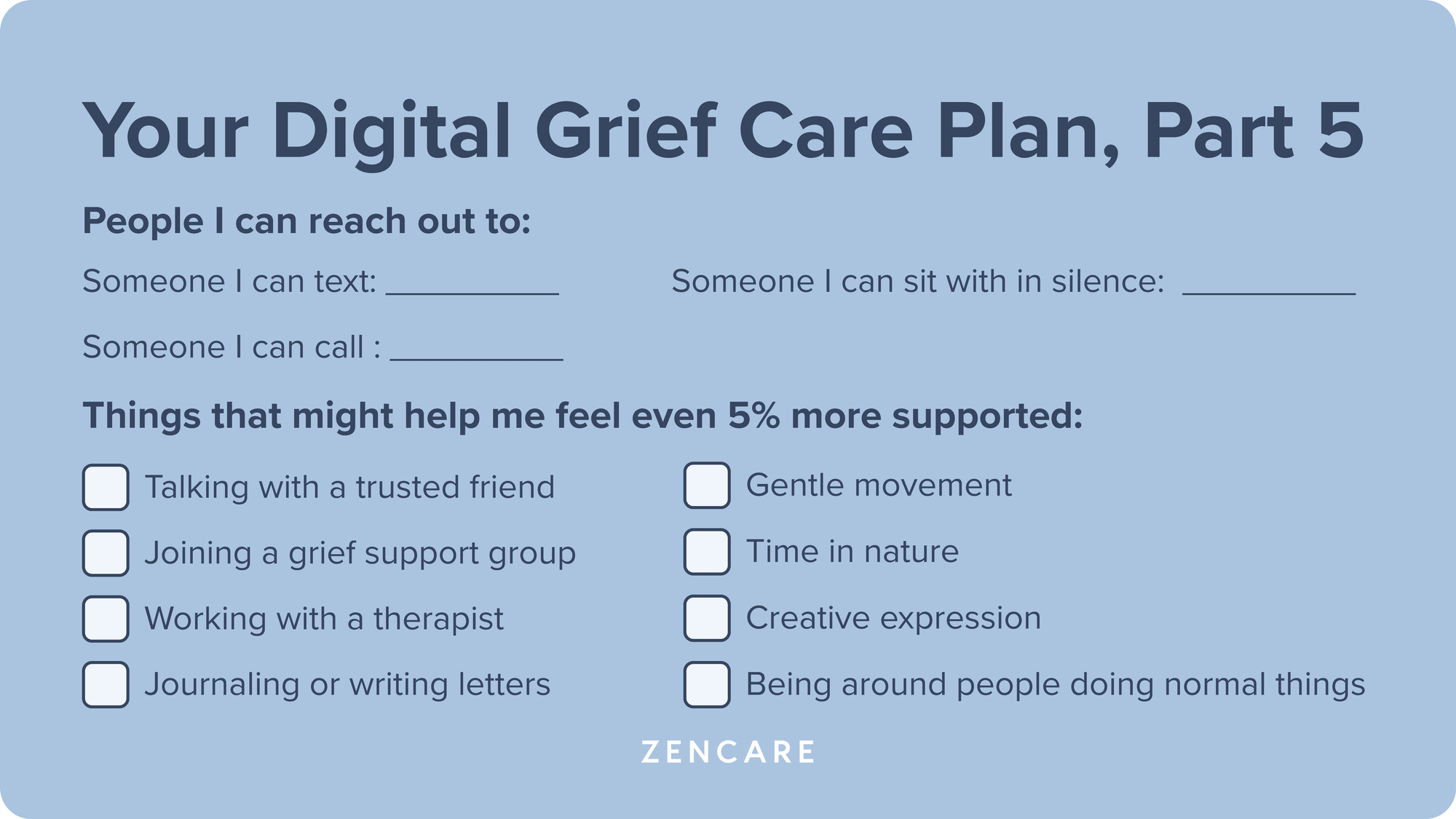
- Talk to close friends or family, even if just to sit together quietly.
- Join a grief support group or work with a therapist.
- Use journaling, creative expression, or nature to process emotions.
- Create simple rituals that mark your loss in meaningful ways.
- Spend time outside in nature
- Join a group that does not involve grief (art, sports, & etc)
.pullquote {
font-family: “Proxima Nova”, -apple-system, BlinkMacSystemFont, “Segoe UI”,
Roboto, sans-serif;
max-width: 640px;
margin: 2rem auto;
padding: 1.75rem 2rem;
background: #f1f6fd;
border-left: 6px solid #6f8dae;
border-radius: 14px;
box-shadow: 0 10px 25px rgba(54, 69, 96, 0.12);
display: flex;
gap: 1.25rem;
}
.pullquote-mark {
font-size: 3.5rem;
line-height: 1;
color: #aac4e0;
font-weight: 700;
flex-shrink: 0;
margin-top: -0.4rem;
}
.pullquote-body {
color: #364560;
}
.pullquote-text {
font-size: 1.05rem;
line-height: 1.7;
margin: 0 0 0.75rem;
}
.pullquote-attrib {
margin: 0;
font-size: 0.95rem;
font-weight: 600;
color: #6f8dae;
}
.pullquote-name {
text-transform: none;
letter-spacing: 0.02em;
}
As a grief therapist, I believe we offer something many people rarely
receive in their day-to-day lives: a space where your loss is understood,
honored, and never rushed. Grief reshapes you, and you deserve a place
where that is held with care.
— Vitoria Cottiss, AMFT
Therapy gives you room to speak honestly about your pain. When you work with a grief therapist, you begin to understand the waves of grief, navigate the harder feelings, and create rituals or practices that support healing in a grounded, meaningful way.
Coping with loss online can supplement your healing, but it’s not a replacement for personal connection and intentional self-care.
Takeaway: Healing often happens offline. You don’t have to grieve out loud for it to be real.
Choosing What Actually Heals: What Does Grief Look Like When It’s Yours?
Grief looks different for everyone. Some people share openly. Others withdraw. Some cry. Some go numb. All feelings should be welcome.
You get to decide how you grieve. You can change your mind from one day to the next. You can post one week and go quiet the next. You don’t owe anyone an explanation. As long as you’re not harming yourself or others, you get to grieve how you need to.
The most important thing is this: trust what feels helpful to you. Let go of what doesn’t.
If you’re looking for a therapist to help you cope with grief or loss, start with Zencare. You can use the Specialty filter to select “Loss, grief and bereavement” or use the Approach filter to select “Grief Therapy”.
Final Takeaway: Grief needs space, not likes. Make room for what heals you, and release the rest.

Grieving and Social Media FAQs Answered by Vitoria Cottiss, AMFT
Is it okay if I don’t post about my loss at all?
Of course, it is your choice to post or not post about your grief.
What should I say when I don’t know how to comfort someone online?
Sometimes “I’m sorry for your loss” becomes white noise. A gentler offering like “I’m holding space for you” can feel more tender.
Can I unfollow someone if their grief content is triggering me?
It is a completely normal thing to pause, unfollow, or get offline if someone is sharing things that are difficult.
What is performative grief?
Performative grief is when someone expresses sorrow more for show or based on pressure than for genuine connection.
How do I stop comparing my grief to what I see online?
Take a moment to pause, breathe, and ask yourself what am I feeling? Oftentimes, we do not listen to ourselves and fall easily into believing we need to be something different.
Is it wrong to take a social media break while grieving?
No at all, throw that phone in the ocean! Being offline is helpful, calming, and allows you to sit with all your feelings related to your own grief.
How can I honor someone offline without using social media?
The most beautiful way we can honor someone we love offline is by continuing to share their stories. The ones we lose live on through the stories, rituals, and celebrations we continue to carry forward in their honor.