Step-by-Step Guide to Out-of-Network Benefits
Updated on October 6, 2025.

When looking for a therapist, you have the option to choose between in-network and out-of-network providers. In-network therapists are called “in-network” because they have negotiated a contracted rate with your health insurance company; as a result, they are typically more affordable than out-of-network therapists.
A therapist is out-of-network if they don’t have an agreement with your health insurance company and set their own professional fees. Therapists may choose to be in-network with many, some, or no health insurances at all.
When you see an out-of-network therapist, you pay the full session fee at each appointment. Therapy session fees vary by geography, therapist education level, and years of experience.
While finding an in-network therapist is often the default choice, checking out out-of-network therapists can help expand your therapist search. This is especially true in big cities like New York City, Boston, and San Francisco, where therapists who take insurance tend to be booked out to full capacity and have long wait times for appointments.
If the therapist you’re seeing is not in-network with your insurance, then you will have to pay the full price of the session upfront. Fortunately, depending on your health insurance plan, your insurance company may help reimburse a portion of the cost by mailing you a check or depositing money into your account. If you have a PPO or POS health insurance plan, you’ll get back partial reimbursement for out-of-network services, making seeing an out-of-network therapist more cost-effective and budget-friendly.
Still unsure about using your out-of-network benefits? Use the following steps to learn how out-of-network benefits work and how you can work with an out-of-network therapist. We’ll also talk about how to get an out-of-network reimbursement paid. Though navigating out-of-network benefits can be cumbersome, it can save you a lot of money in the long run. Even if you don’t fully understand the terms below, having the details upfront can help you figure out how payment works, and prevent any unexpected bills.

1. Check your out-of-network benefits
These are typically in the Summary of Benefits, included in a member information packet or on your insurance company website. Keep an eye out for these terms:
- Out-of-network deductible: This is the amount of money you have to pay before you are eligible for reimbursement.
Let’s say your out-of-network deductible is $1,000, and your insurance company pays for 100% of services after you meet that amount. That means you’ll have to pay $1,000 out of pocket, after which you’ll have “met your deductible.”
In this scenario, if you spend $1,500 on therapy services, you’ll have to pay $1,000 out of pocket (e.g. $100 at each session for 10 sessions), but a portion of the remaining $500 will be reimbursed to you in the form of a check (mailed to you after you submit your claim). Deductibles reset every calendar year, and any health expense you pay out-of-pocket contributes to meeting it.
- Coinsurance: This is the percentage of the service fee that you’re ultimately responsible for paying.
Let’s say your therapist charges $100 per session. If your coinsurance is 25%, you’re only responsible for paying $25. Just remember that this comes in the form of a reimbursement: you’ll need to pay the full $100 upfront, then your insurance will send you a check for $75 after the session, once you’ve met the deductible and submitted a claim.
Some insurance companies determine an “allowed amount,” which caps the session fee that they’ll cover. If your insurance has determined $100 is their “allowed amount” per session, at a 25% coinsurance rate, your insurance company will still only reimburse you up to $75, no matter what the therapist’s session fees are. In other words, if your insurance has an allowed amount of $100 but your therapist’s session fees are $200 per session, you won’t get reimbursed more; you’ll still be reimbursed $75, and will be ultimately responsible for $125.

2. Call your insurance company to verify your benefits
The best way to be sure of your benefits is to clarify information with your insurance company member services line. You can find this phone number on the back of your insurance card or through your online insurance platform.
Ask these questions when speaking to your insurance company about benefits:
- How much of my deductible has been met this year?
- What is my out-of-network deductible for outpatient mental health? (Outpatient means treatment outside a hospital such as therapy sessions.)
- What is my out-of-network coinsurance for outpatient mental health?
- Do I need a referral from an in-network provider to see someone out-of-network?
- How do I submit claim forms for out-of-network reimbursement? (Claims are forms that are sent to your insurance company to receive reimbursement for sessions you paid for out of pocket.)
3. Ask your therapist for a Superbill
When you’re looking for a therapist, ask if they are willing to submit claims to your insurance company for reimbursement. While some therapists offer this, typically, the client is responsible for submitting claims (learn more about different billing options here.)
Your therapist will provide you with a document called a Superbill that you send directly to your insurance company at the end of each month. The Superbill details how many sessions you’ve had, and the total fee.

4. Receive out-of-network reimbursement!
You’ll need to pay your therapist the entire session fee at the time of service, but depending on your specific plan, your insurance company will mail you a check to reimburse a portion of that cost. There are even apps for that! Using an app like Reimbursify can help you navigate the reimbursement process in a few clicks.
There are many reasons to see an out-of-network therapist. By following these steps, you’ll be able to expand your search and make the most of your insurance. Now that you have the details, dare to dream big as you search for the perfect therapist for you. Zencare makes it simple to learn more about the therapists in your community through our therapist directory, where you can view therapist introductory videos, read about their approaches, and book a consultation call with them all from their profile page. You’ll also find information about their accepted insurance and fees, but remember that seeing an out-of-network therapist is worth considering.
What are the benefits of seeing out-of-network therapists?
You may consider seeing an out-of-network therapist if you are looking for a therapist with a unique specialty, seeking highly personalized services, and/or have a high deductible health insurance plan such that you would have a high out-of-pocket cost either way.
Here are additional reasons people seek out-of-network therapy services:
1. You’re looking for a therapist with a unique skill set
While many therapists are qualified to treat common challenges – such as anxiety or depression – if you are interested in working with a specialist to address a specific challenge, you should consider looking out-of-network.
Private pay therapists often have more specialized practices. So if you come across a therapist whose skills directly speak to your needs, it’s worth reaching out.
Picture your dream therapist. If you imagine one of the following – or someone with a similarly niche expertise – consider looking outside of your insurance network:
- A therapist of color
- An eating disorder therapist
- An OCD specialist
- An insomnia specialist
- A cognitive behavioral therapist (CBT) specialist
- A therapist who specializes in working with LGBTQ couples
2. You have a high deductible plan
A deductible is the amount you have to pay upfront before your insurance coverage kicks in. If you have a $6,000 deductible and you haven’t had any other medical expenses yet in the year, you are responsible for paying up to $6,000 in therapy session fees out-of-pocket before your standard copay applies. This is a case where seeing an in-network therapist and out-of-network therapist can accrue effectively the same cost.
3. You have good out-of-network benefits
If you have good out-of-network benefits, your insurance company may reimburse you as much as 80% of each session fee, depending on your plan and the therapist’s rate.
This means that in some situations, using your out-of-network benefits can actually be more affordable or comparable to your standard copay to see an in-network therapist.
4. You want highly personalized services
If a therapist isn’t constrained by only providing services they can bill to an insurance company, they are often able to spend more time and creativity crafting the perfect treatment plan for you. Especially if you would like to receive mental health services for a long period of time, this extra attention may benefit your progress.
Out-of-network therapy opens doors for out-of-the-box treatment
Out-of-network therapists can offer longer or more frequent sessions than insurance might cover. You can also explore out-of-the-box solutions.
For example, if you are struggling with eating challenges, an out-of-network therapist might go with you to the grocery store or help you cook and eat healthful meals. These are services that an in-network therapist would not be able to bill (so they likely wouldn’t be offered).
This is also true of services that are not intended to address a diagnosable mental health condition, such as couples counseling.
5. You want to combine medication management with talk therapy
Some psychiatrists offer both psychotherapy and medication management, which allows for a more comprehensive understanding of your mental health needs before prescribing.
These services are often private pay, but they offer great convenience and highly coordinated care.
6. You don’t wish to use insurance benefits
Privacy from your family and/or parents
If you are on your parent’s insurance plan and are uncomfortable with them knowing you are seeing a therapist, you might consider paying out-of-pocket.
Note: Since this also means you can’t use out-of-network benefits, session fees could get steep. Look for a therapist who offers a sliding scale— if you have financial limitations and explain the situation, some therapists are able to offer reduced rates.
Privacy from your health insurance company
In order for your insurance to pay for therapy sessions, therapists are required to provide the company information regarding your sessions, including a diagnostic code. If you don’t want your insurance company to have access to any information about your mental health, consider out-of-network options.
7. You don’t want to wait to start therapy
In cities such as Boston, San Francisco, New York, and Washington D.C., many therapists choose not to accept insurances because they fill their caseloads easily and quickly.
Especially for the less-known insurance plans, it can be very difficult to find a therapist who is in-network and accepting new clients. If you limit your search by insurance, you may have to spend months on a waitlist before seeing a therapist.
8. You found a great match!
At the end of the day, your relationship with your therapist is one of the most important aspects of the healing process.
If you only consider in-network therapists, you might eliminate therapists who would be a really good fit for you and maybe help you feel better faster.
Choosing an in-network therapist who doesn’t make you feel comfortable or specialize in the areas you’re struggling with solely because they’re in-network is a waste of money (and not to mention time!). Prioritize the personality fit and you’ll find a great match — your mental health is worth it.
If you are working with a therapist you really like and your insurance company changes (you graduate school, you get off your parent’s insurance, you switch jobs), don’t panic! Depending on your insurance plan, it may still be affordable to see your therapist using out-of-network benefits.
Find in-network and out-of-network therapists on Zencare.co
Need help navigating health insurances or using out-of-network benefits? There are two ways you can find therapists out-of-network on Zencare.co:
Option A:
1. Check your out-of-network benefits: These are typically in the Summary of Benefits that is included in a member information packet or on your insurance company website
2. Call your insurance company to verify: The best way to be absolutely sure of your benefits is to call your insurance company member services line and ask:
- What is my out-of-network deductible for outpatient mental health?
- How much of my deductible has been met this year?
- What is my out-of-network coinsurance for outpatient mental health?
- Do I need a referral from an in-network provider to see someone out-of-network?
- How do I submit claim forms for reimbursement?
3. Ask your therapist for a superbill: When you’re looking for a therapist, ask if they’ll be willing to submit claims to your insurance company for reimbursement. Typically, they’ll provide a document called a superbill that you send directly to your insurance company at the end of each month which will detail how many sessions you’ve had and the total fee.
4. Receive reimbursement! You’ll need to pay your therapist their entire session fee at the time of service, but depending on your specific plan, your insurance company will mail you a check to reimburse a portion of the cost.
In our therapist directory, you can filter by Insurances. However, you can also filter by the pay range — so enter how much you’re willing to pay for an out-of-network therapist, check out some therapist profiles, and schedule an introductory call with ease.
Option B: Zencare’s Out-of-Network Cost Estimate Tool
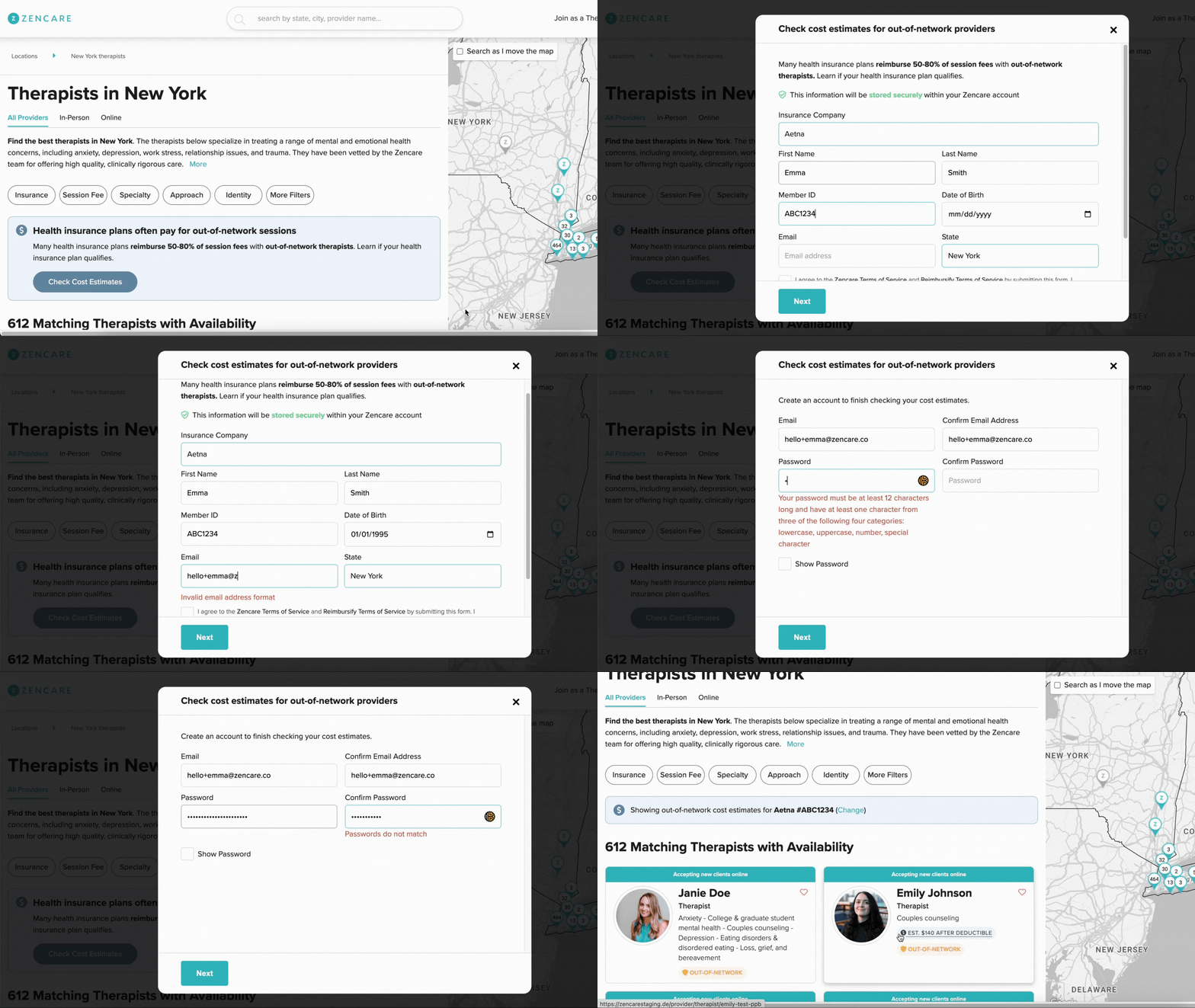
You can use Zencare’s out-of-network Cost Estimate is a tool to calculate what therapy will likely cost if you use your health insurance plan’s out-of-network benefits to receive reimbursement for part of your therapy session.
Input your name, health insurance ID, and date of birth, and we’ll check whether you have out of network benefits for therapy sessions!
- Sign up for a free Zencare client account.
- Once you are logged into your account, visit the search page in your state. Click on the “Check Cost Estimates” button at the top of the page, or on a provider card.
- Fill out the information required and click “Next.” Our tool will run your information and let you know if you have out-of-network therapy benefits!
- On the search page, you’ll see session estimates for out-of-network providers, along with an indication of which providers are in-network with your health insurance plan (they’ll have a green “In-Network” badge).
- In some cases, you may get a result that says we aren’t able to verify whether your health insurance plan offers reimbursements for out-of-network therapy. Don’t be alarmed if this is what you see! We still encourage you to continue your search for a therapist in your network. You can do this by selecting your insurance provider from the Insurance filter drop down. You can also filter your search by Session Fee, or look at therapists that offer a sliding scale.
Please note that the Cost Estimate tool is intended to aid therapy seekers in finding their best fit therapist by exploring out-of-network options — Zencare does not set the pricing or fees of therapists, and Zencare does not handle billing or other charges for therapy seekers.
I have my estimate — now what?
Congratulations! You now have an estimate that can be used to guide your decision-making in reaching out to an out-of-network therapist. If the range provided to you works for your budget, and you find out-of-network providers that meet your criteria — reach out to them for a free consultation to see if you’d be the right fit!
When you reach out to a therapist, you may also be able to confirm with them the exact details of the Out-of-Network Cost Estimate you received, as well as other details like your deductible and how much of it you’ve met so far. You’ll get a better idea of what each session with that therapist would cost, and how much you could expect to be reimbursed for.
While the data on Zencare is pulled from health insurance companies’ databases, they are not a guarantee of coverage. For ultimate accuracy, we always recommend confirming your benefits by calling your insurance company. Here are steps you can take to verify your coverage with your insurance company!
Frequently Asked Questions
Do I need to create an account to use this tool?
- Yes, if you would like to use the Cost Estimate tool you will need to create a Zencare Client account. You can create one here. It is completely free to create a Zencare account, use our directory, use the Cost Estimate tool, and reach out to therapists for a consultation!
Why do some therapists have a “check cost estimate” badge and others don’t?
- The Cost Estimate tool is optional for therapists to add to their profile. Some therapists have not opted-in to adding this tool to their profile. You can still reach out to any therapist that you’re interested in, regardless of if they have this tool!
Where can I get an estimate of my out-of-network costs?
- You can get an estimate of your out-of-network costs by using our Cost Estimate tool. There is a “Check Cost Estimate” button that you can click at the top of our directory’s search, on a therapist in your search results, or on a therapist’s profile.
Is it free for me to get an estimate?
- Yes! It is free for you to get an estimate.
What if I accidentally fill out my insurance information wrong?
- No worries! If you filled out your insurance incorrectly while using the Cost Estimate tool, one of the pop-ups will show a “Change” option (example below) — this will bring you back to your Zencare Account where you can update your insurance details.