You’re not alone — the state of mental health report 2025
Published January 12, 2026.

Disclaimer: This article reflects trends from Zencare’s platform usage and may not represent nationwide mental health patterns. For personalized support, consult a qualified professional.

Last year we published our first report on mental health, which drew from how therapy seekers use Zencare, to demonstrate what matters most in the evolving world of mental health. The insights of course are not a complete reflection of the U.S. as a whole, but highlight key trends shaping therapy and the mental health landscape.
This year we’re pulling the same and new information, comparing last year to this year and not only highlighting trends, but also making some predictions for 2026. Let’s dive in!
Table of contents
Click on any item to jump to that section.
.table-of-contents {
border: 3px solid #37bec3 !important;
background-color: #f4fbfe4f !important;
padding: 1rem;
max-width: 100%;
}
.table-of-contents h3 {
margin-left: 14px;
color: #37bec3;
margin-bottom: 0px;
}
.toc-columns {
display: flex;
gap: 2rem;
padding: 1rem 14px;
flex-wrap: wrap;
}
.toc-columns ul {
list-style-type: disc;
padding-left: 1.5rem;
flex: 1;
min-width: 200px;
margin: 0;
}
.section-title a {
font-weight: 600;
line-height: 1.25rem !important;
color: #222 !important;
text-decoration: none !important;
}
.section-title {
margin-left: -10px;
line-height: 1.5rem;
font-size: 16px;
}
.toc-columns li {
margin-bottom: 0.5rem;
}
/* Mobile: Stack columns vertically */
@media (max-width: 768px) {
.toc-columns ul {
min-width: 100%;
flex: 1 1 100%;
}
.toc-columns {
gap: 0;
}
}
What matters most when searching for a therapist?
Finding the right therapist comes down to a strong “therapeutic alliance” — a productive, trusting relationship between therapist and client. At Zencare, we believe the right match can change everything, which is why feeling understood and secure matters. This often means finding a therapist who aligns with a client’s needs, whether that’s specialty, insurance or budget, cultural background or gender expression, or preferred session format.
Key factors include:
- Specialties: 38% of users filtered by specialties such as anxiety, trauma, or relationship issues.
- Insurance: 15% of users prioritized therapists compatible with their insurance to manage costs.
- Therapist Identity Traits: 7% sought therapists who shared cultural backgrounds, gender identities, or expertise in LGBTQIA+ topics.
- Gender: 4% of therapy seekers filtered for therapists nearby.
- Session Format: 4% prioritized choosing between online or in-person sessions.
Compared to last year:
- Specialty importance increased by 12%
- Insurance importance decreased by 6%
- Therapist Identity Traits importance increased by 2%
This year, there’s a noticeable increase in therapy seekers prioritizing therapist identity traits, with a 2% rise compared to last year. This suggests a growing emphasis on finding a therapist who not only understands their challenges but also shares or affirms aspects of their lived experience.
At the same time, there’s been a 6% decrease in insurance-based filtering, pointing to a continued shift toward values like personal connection, cultural alignment, and specialized expertise, even if that means going out of network. In fact, 47% of therapy seekers were looking for a therapist without insurance.
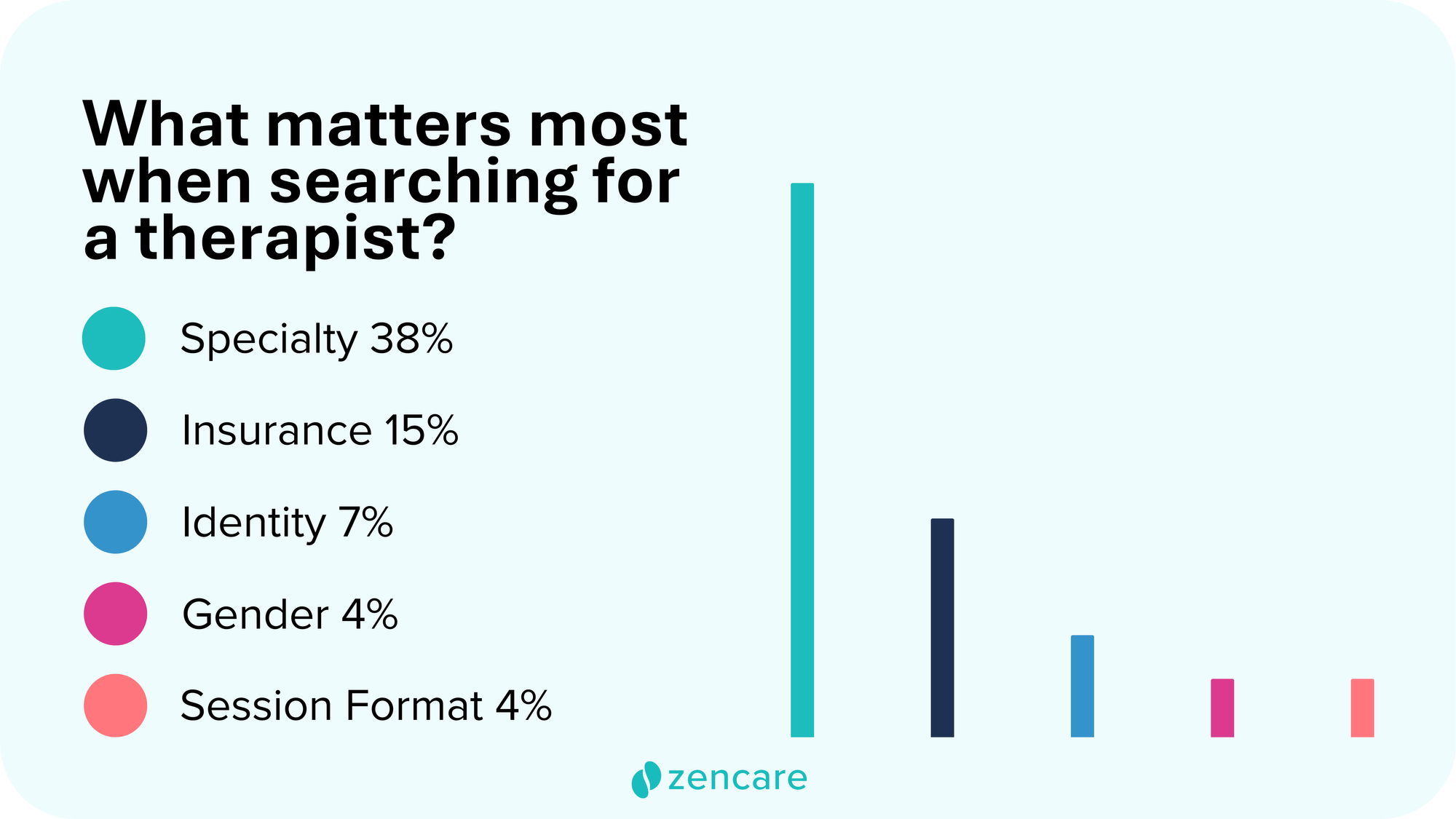
Takeaway: Therapy seekers are increasingly prioritizing identity alignment and specialization over insurance coverage, reflecting a deeper focus on personal fit and meaningful connection.
What specialties are most popular?
Mental health looks different for everyone. Some people seek therapy for a clear issue, while others want support for feelings they can’t explain. Either way, the right therapist can help you feel more balanced. Choosing a provider with the right specialty ensures they have the experience to support your specific needs, from anxiety to trauma to relationship stress.
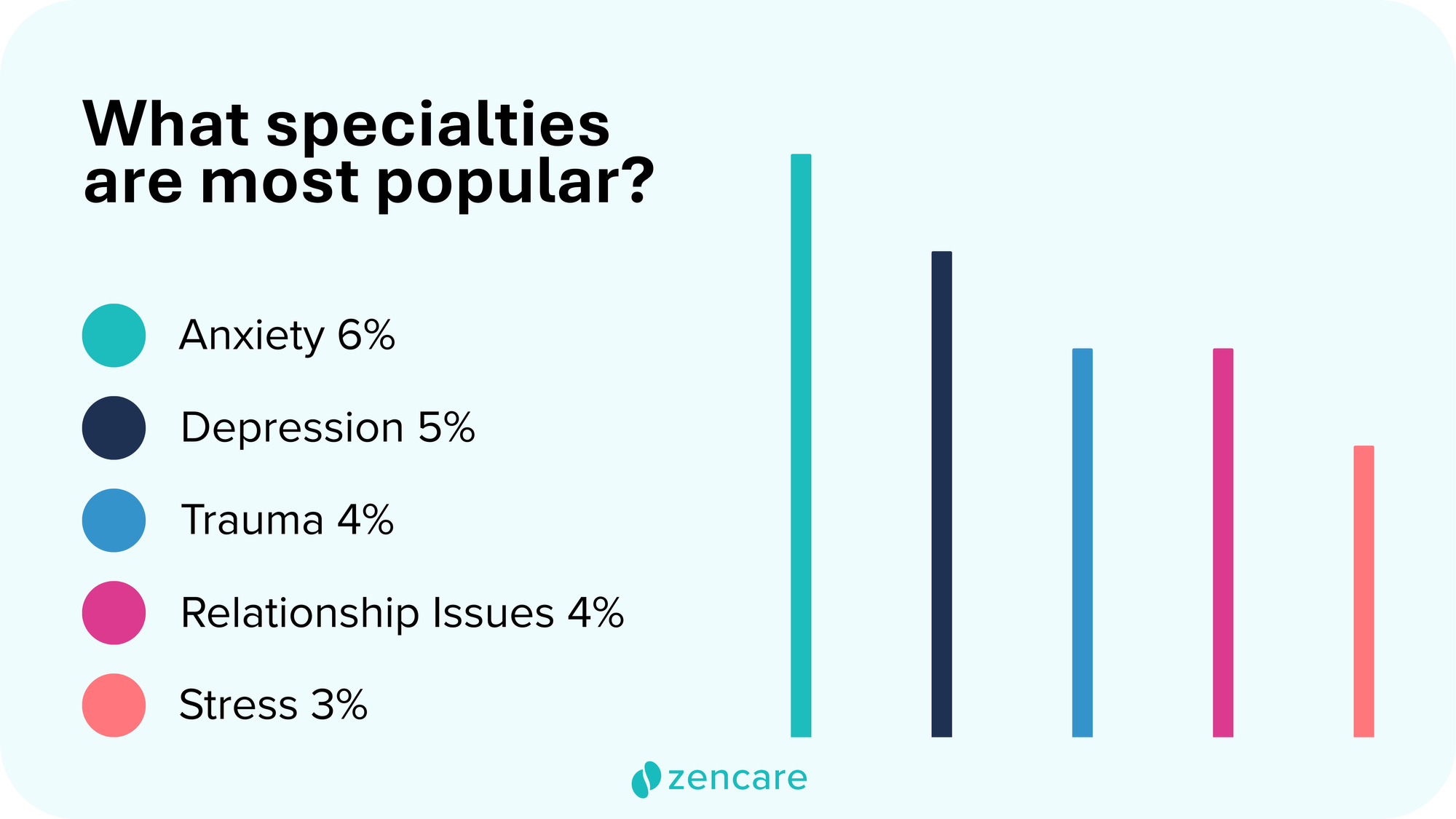
In 2025 the most searched for specialties on Zencare were:
- Anxiety 6%: Therapists can help individuals understand their triggers, manage symptoms, and build coping tools to feel more in control of daily life.
- Depression 5%: Therapists trained in depression treatment can support clients in processing emotions, building resilience, and finding a path toward healing.
- Trauma 4%: Trauma-informed therapists work with clients to build safety, regulate emotions, and process traumatic memories at a manageable pace.
- Relationship Issues 4%: Therapists who specialize in relationships help clients strengthen communication, build connections, and navigate challenges.
- Stress 3%: Stress management therapy can be especially helpful for those juggling work, caregiving, or life transitions.
.pullquote {
font-family: “Proxima Nova”, -apple-system, BlinkMacSystemFont, “Segoe UI”,
Roboto, sans-serif;
max-width: 640px;
margin: 2rem auto;
padding: 1.75rem 2rem;
background: #effcfd; /* soft background */
border-left: 6px solid #1dbcbd; /* teal accent */
border-radius: 14px;
box-shadow: 0 10px 25px rgba(29, 188, 189, 0.18);
display: flex;
gap: 1.25rem;
}
.pullquote-mark {
font-size: 3.5rem;
line-height: 1;
color: #1dbcbd; /* teal quote mark */
font-weight: 700;
flex-shrink: 0;
margin-top: -0.4rem;
}
.pullquote-body {
color: #263646; /* dark neutral for readability */
}
.pullquote-text {
font-size: 1.05rem;
line-height: 1.7;
margin: 0;
}
.pullquote-text a {
color: #1dbcbd;
text-decoration: underline;
text-decoration-thickness: 1px;
text-underline-offset: 3px;
font-weight: 600;
}
.pullquote-text a:hover {
text-decoration-thickness: 2px;
}
Compared to last 2024, anxiety is still the leading specialty on Zencare,
although it’s not as popular as last year. In 2024
ADHD
and
couples counseling
tied for 4th place last year, but have been taken over by
stress
this year.
For non-crisis issues, like
burnout
and
stress,
we’re seeing a 4.8% increase in therapy demand. More people are choosing
to work on issues proactively and seeing therapy less as only an avenue for major issues,
but a place where they can work on their general well-being.
Takeaway: The most searched specialties reflect common, real-life challenges people face daily. Therapy seekers are looking for clinicians with the tools, experience, and understanding to support them in specific, deeply personal areas of life.
Specialty growth trends in 2025
Over the past year, interest in specific therapy specialties increased as more people focused on addressing particular mental health concerns. Notable patterns include:
- Depression: Searches increased by 30%. Therapy supported a growing awareness of how depression affects daily functioning.
- Couples Counseling: With a 50% rise in searches, couples counseling saw the highest growth this year. Many sought help with communication, conflict, and relationship changes to build healthier partnerships.
- Trauma: Trauma-related searches rose by 19%. Therapy seekers often looked for trauma-informed care focused on emotional regulation, safety, and long-term healing.
- Stress: Searches for stress management therapy grew by 40%. Clients frequently looked for support in setting boundaries and building healthier coping tools.
- Life Transitions: This specialty saw a 50% increase. Therapy offered space to process uncertainty and build confidence during periods of change.
Whether navigating emotional lows, relationship stress, or major life changes, more people are seeking targeted support that aligns with what they’re going through.
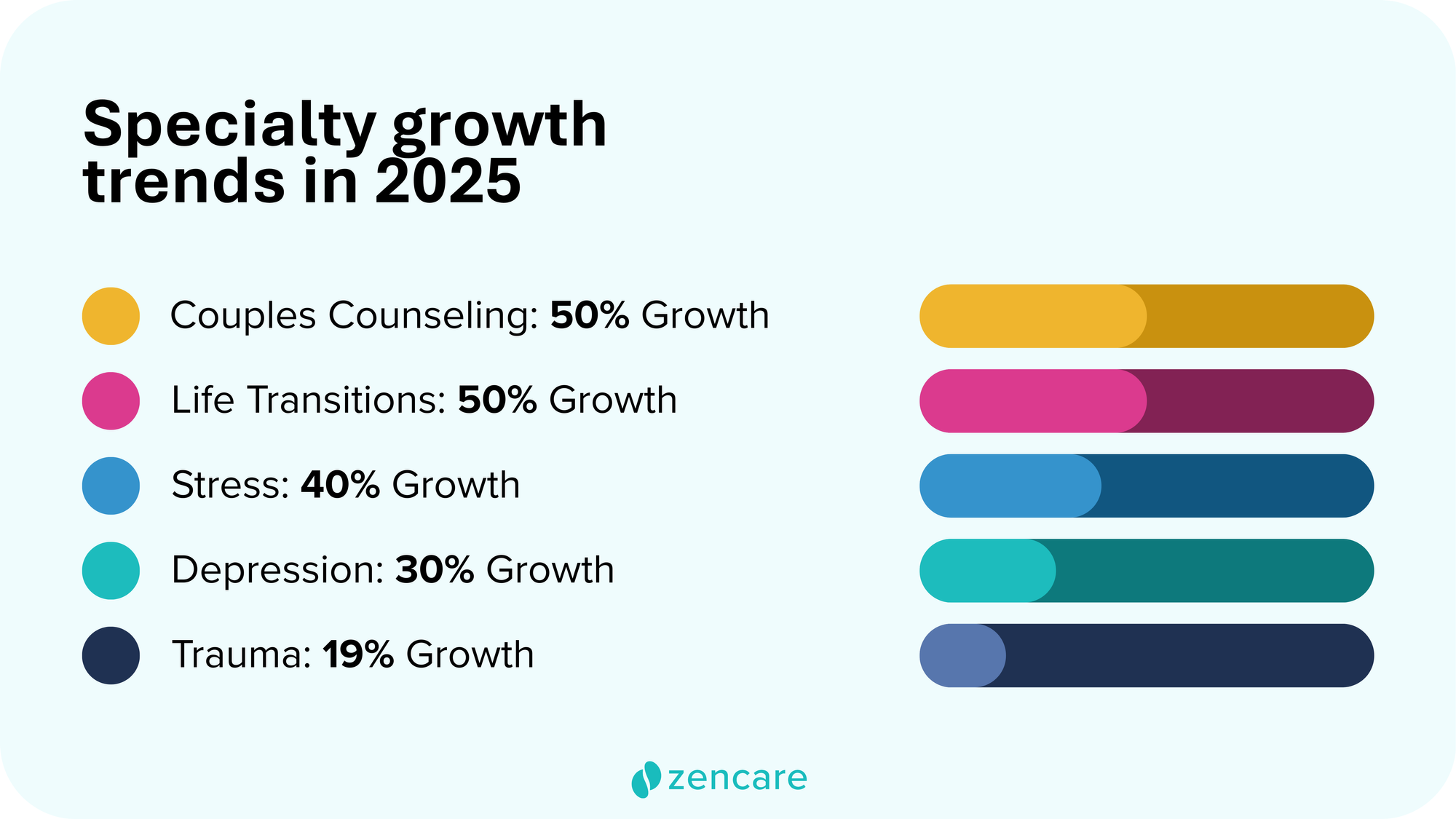
Takeaway: Therapy seekers are moving toward more specialized care, with rising demand for support in depression, relationships, trauma, stress, and life transitions, areas that reflect both personal and societal pressures.
What therapy types are most popular?
People come to therapy with a wide range of experiences, identities, and goals, and therapy types are just as diverse. While most methods offer value, finding an approach that fits your needs, preferences, and goals can make the process more effective and meaningful. What works best may change over time, depending on where you are in your mental health journey.
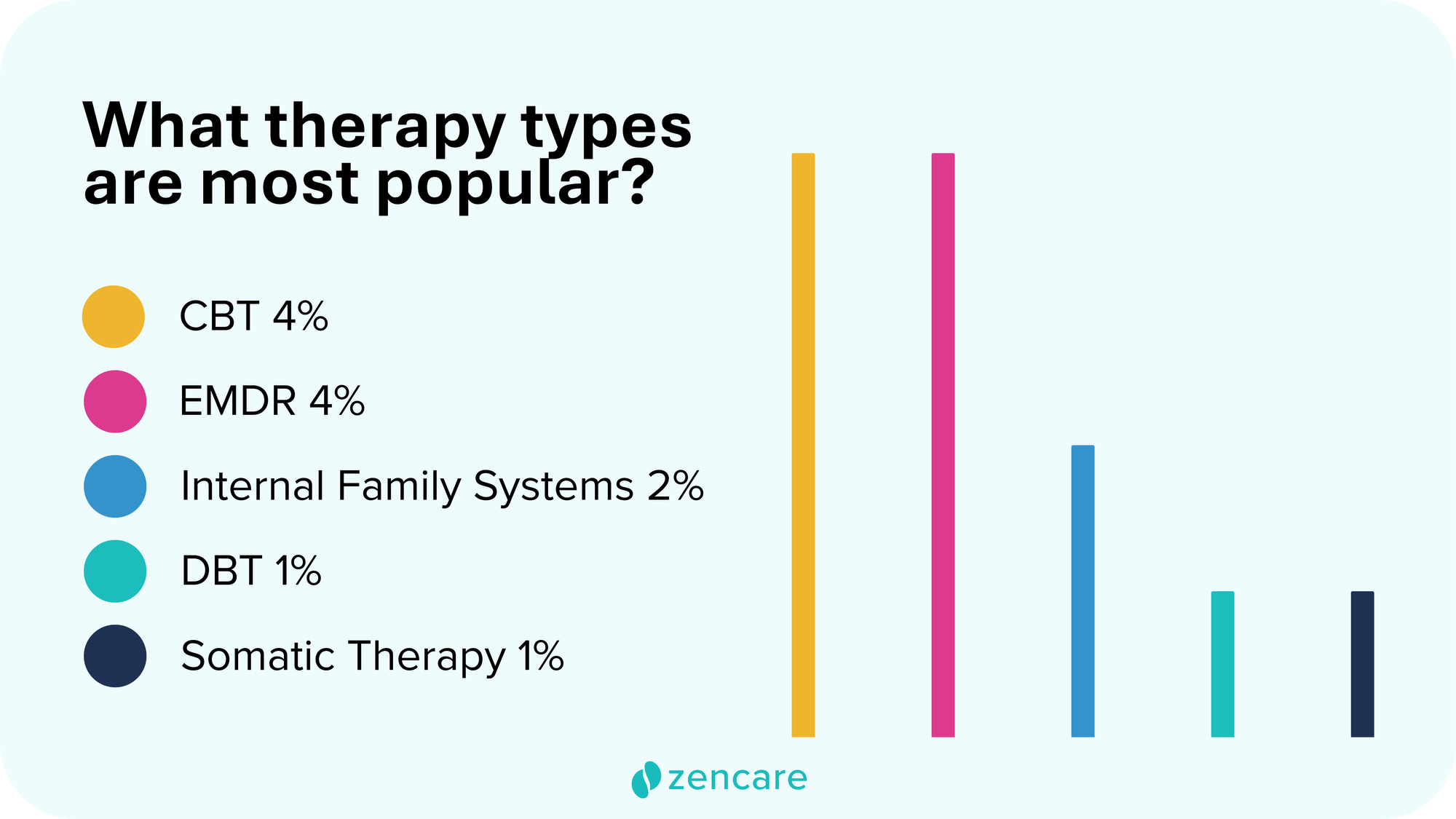
In 2025, Zencare therapy seekers showed strong preferences for these approaches:
- Cognitive Behavioral Therapy (CBT) 4%: CBT helps individuals identify and change unhelpful thought patterns and behaviors to improve emotional well-being and coping skills.
- Eye Movement Desensitization and Reprocessing (EMDR) Therapy 4%: EMDR uses guided eye movements to help the brain reprocess traumatic memories and reduce emotional distress.
- Internal Family Systems (IFS) 2%: IFS explores different “parts” of the self, like inner critics or protectors, to promote internal harmony and self-compassion.
- Dialectical Behavior Therapy (DBT) 1%: DBT focuses on building skills like emotional regulation, mindfulness, and distress tolerance, particularly for those experiencing intense emotions or relationship difficulties.
- Somatic Therapy 1%: Somatic therapy integrates body awareness into the healing process, helping clients release trauma and stress stored in the nervous system.
Zencare is seeing more diverse searches across therapy types, suggesting growing awareness of niche approaches. Pop culture may be driving this shift, with public figures like Miley Cyrus discussing EMDR and The Secret Lives of Mormon Wives cast discussing Ketamine Assisted Therapy.
What identity traits are most popular?
Feeling safe and understood in therapy sometimes means finding a therapist who identifies the same as you or has the same ethnic background as you. Sharing the same cultural or ethnic background as your therapist means you don’t have to explain the cultural or ethnic nuance that might come with something you’re experiencing, because they know.
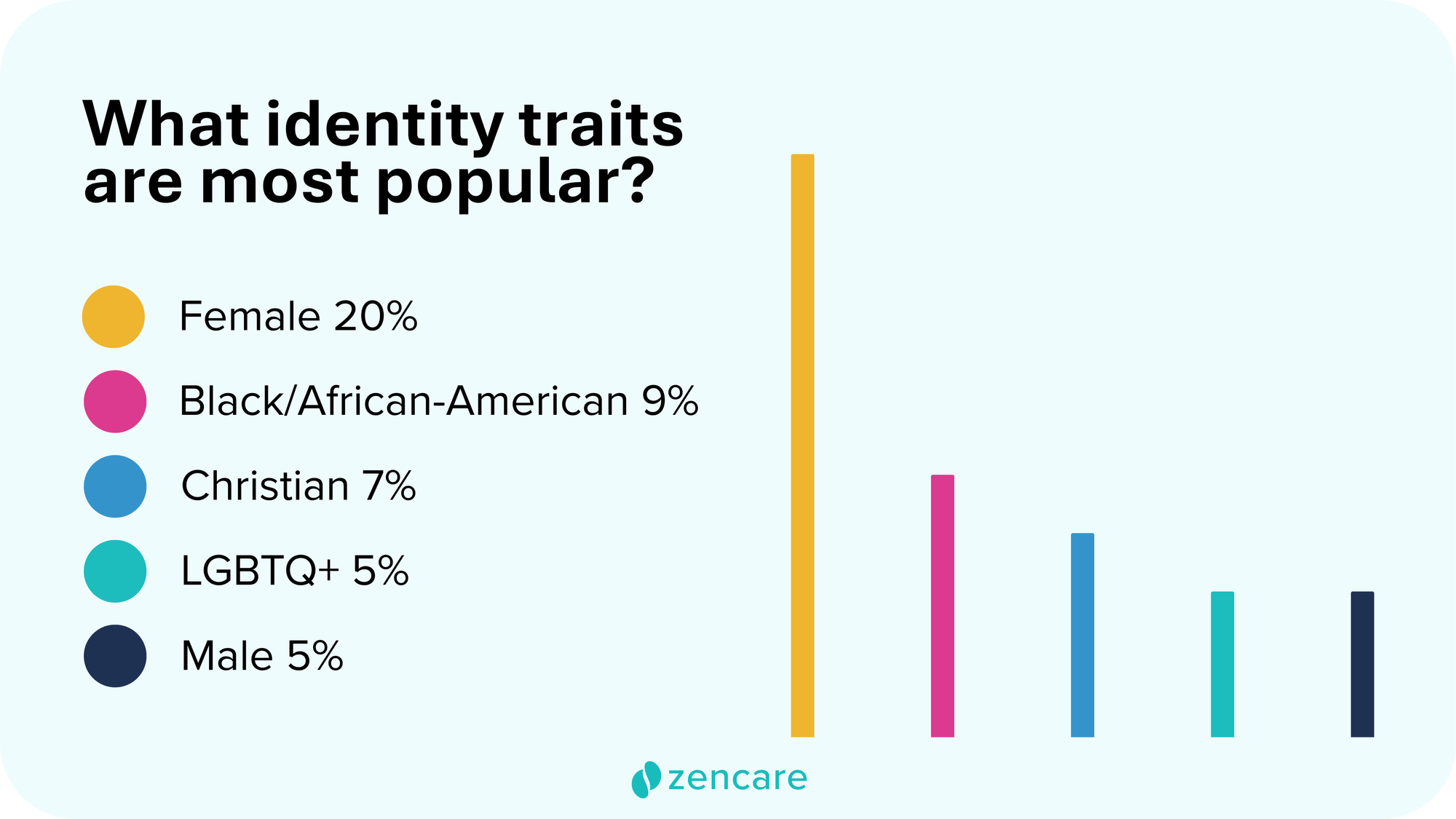
In 2025, therapy seekers on Zencare had these preferences for their therapist:
- 20% searched for therapists identifying as Female
- 9% searched for therapists identifying as Black/African-American
- 7% searched for therapists identifying as Christian
- 5% searched for therapists identifying as LGBTQ+
- 5% searched for therapists identifying as Male
It’s important to note that 11% of all therapy seekers searched for a therapist with a diverse ethnic background, a huge drop from 2024 — where 35% of people searched for a therapist with a diverse ethnic background.
Takeaway: While fewer therapy seekers this year filtered specifically for diverse ethnic backgrounds, many still prioritized finding a therapist whose identity aligns with their own, underscoring the continued importance of cultural understanding, shared lived experience, and feeling seen in the therapeutic relationship.
When and where are people seeking therapy?
Some things never change, and when people seek therapy seems to be one of them! In 2024 and 2025, “fresh starts”, “new beginnings” and “new year, new me” sentiments ring true.
- January: The most popular month to look for a therapist is January. Maybe it’s the New Year’s resolutions, or being able to start something at the top of the year just feels right — either way, most people look for and find a therapist in January.
- Weekdays: On Monday and Tuesdays, searches for therapists spike, this could be because people are more likely to take action on mental health after reflecting over the weekend, feeling the emotional weight of a new week, or setting fresh goals to prioritize their well-being.
Therapy session type preferences
- Online Therapy: 36% of therapy seekers looked for therapists who offer online or virtual therapy sessions.
- In-Person Therapy: 53% of therapy seekers looked for therapists who offer in-person therapy sessions.
- Either: 11% of therapy seekers didn’t have a preference one way or another.
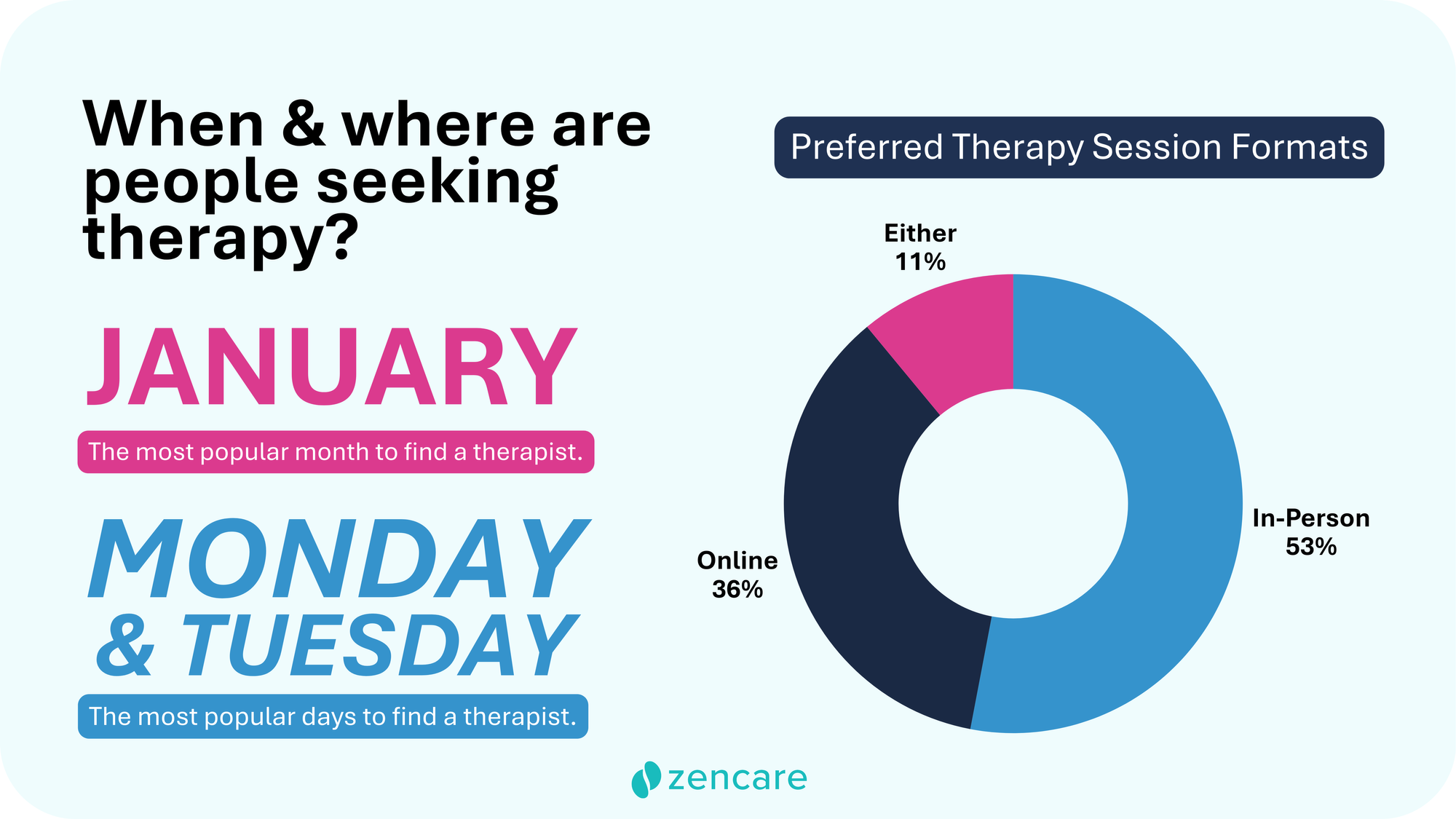
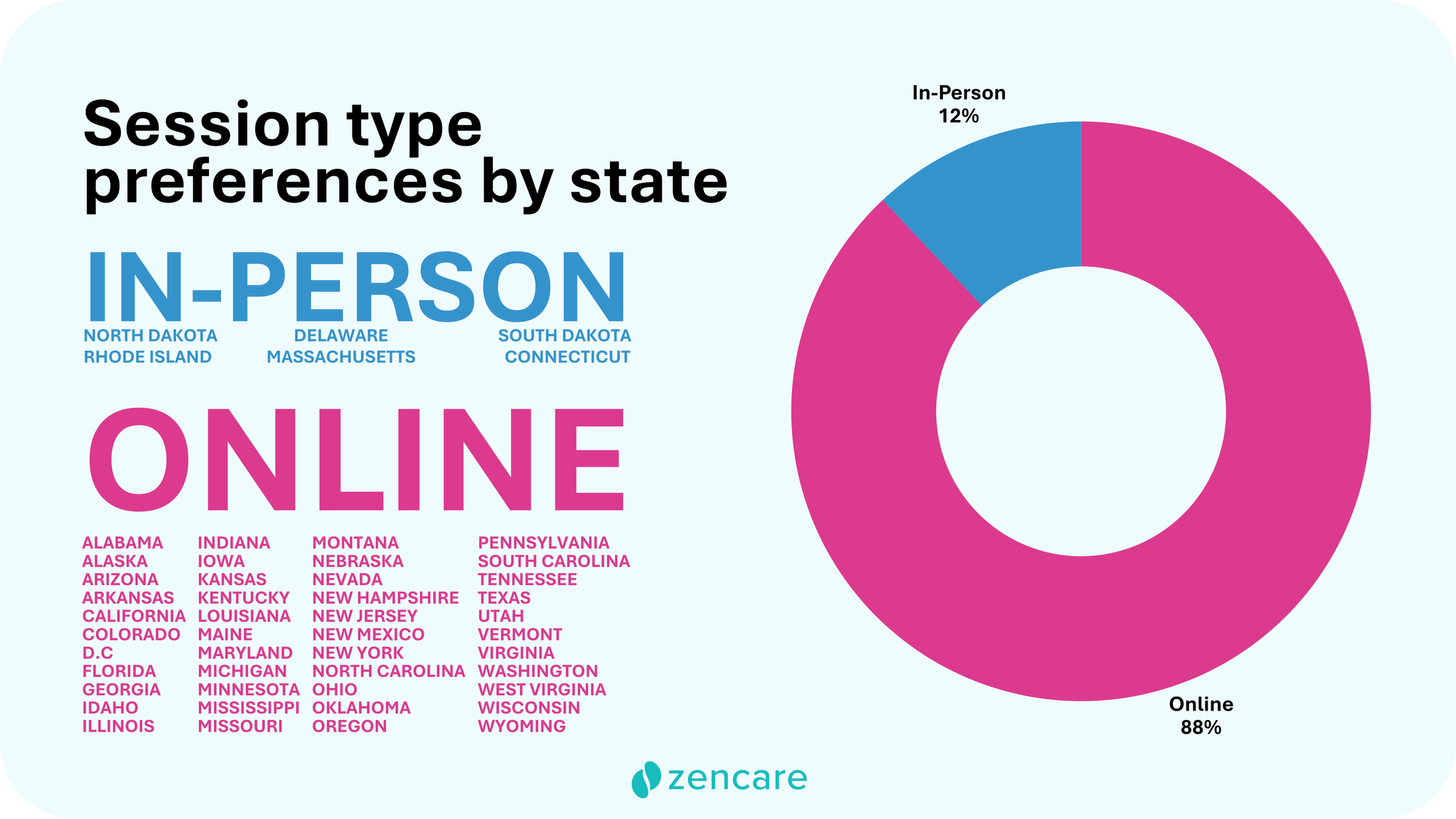
Compared to last year, there was a 9% increase in therapy seekers searching for online therapy, a 11% decrease in people searching for in-person therapy, and a 2% increase in people who didn’t have a preference.
Takeaway: Therapy seekers continue to follow familiar patterns, with most searches happening in January and early in the week. At the same time, interest in online therapy is growing, showing a shift toward more flexible, convenient, and accessible mental health care.
How are men seeking therapy?
Men often face unique mental health challenges and have a higher risk of suicide, underscoring the need for accessible support. Many struggle with anxiety, depression, or loneliness but may hesitate to seek help. As gender norms evolve, there’s growing recognition that mental health affects everyone, and therapy offers meaningful support for men and people of all genders.
Encouraging trends
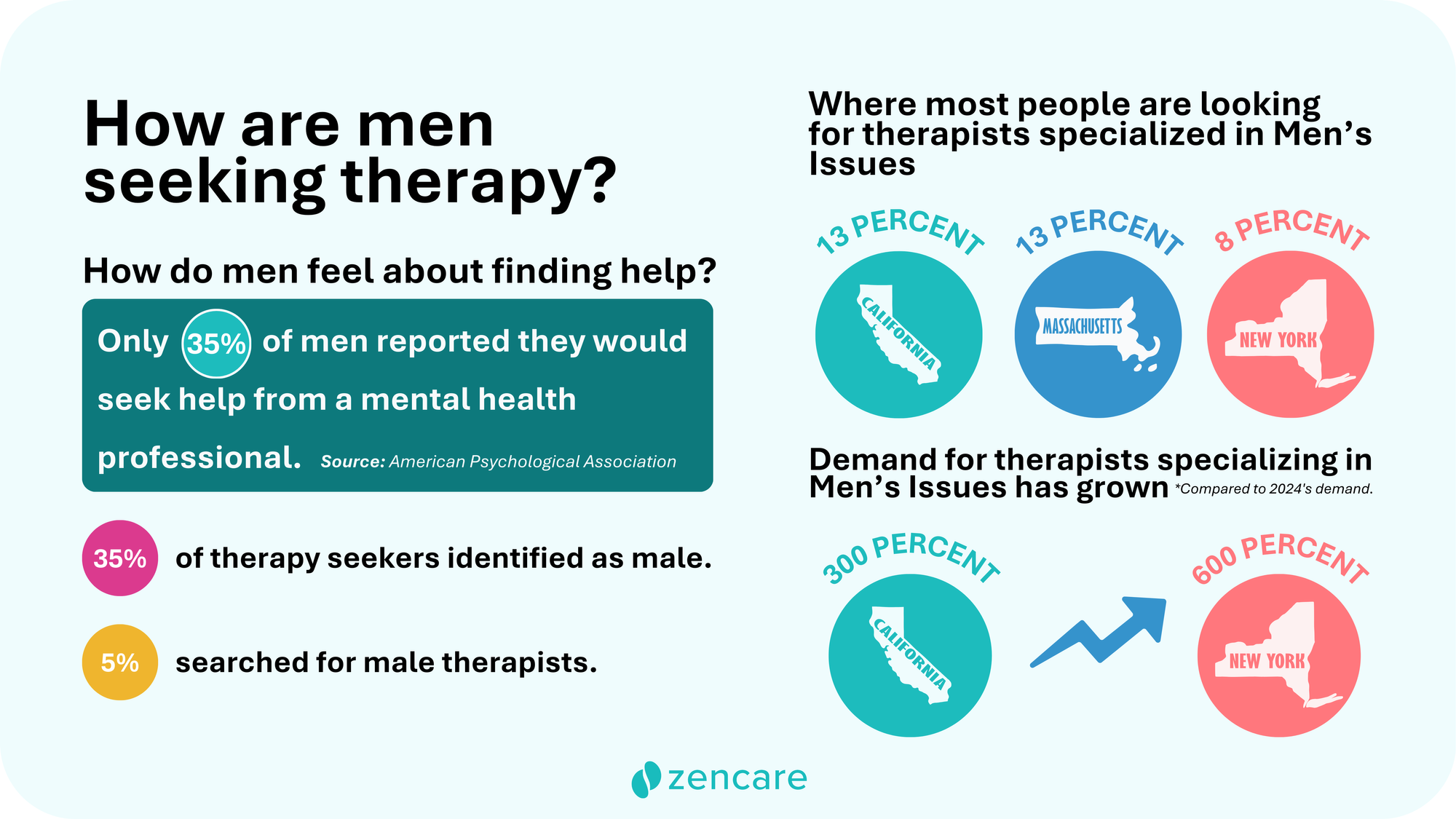
- 35% of therapy seekers identified as male. Last year 34% of therapy seekers identified as male, demonstrating a 1% increase in people identifying as men seeking therapy.
- 5% of men searched for male-identifying therapists. Compared to last year’s 7%, we’ve seen a decrease in men searching for male therapists in 2025.
It’s encouraging to see that more therapy seekers are male, whether or not they choose to see a male therapist.
Men’s issues and top locations
Zencare users can filter by specialty to find therapists experienced in specific concerns. Many providers offer support for Men’s Issues.
Most popular states where people search for Men’s Issues:
- California: 13% of therapy seekers searched for therapists specializing in men’s issues.
- New York: 13% of therapy seekers searched for therapists specializing in men’s issues.
- Massachusetts: 8% of therapy seekers searched for therapists specializing in men’s issues.
Compared to last year, 2024, demand has grown a lot for a therapist specializing in men’s issues: 300% in California and 600% in New York.
More resources on men’s mental health
- Why Are Men Dying by Suicide More? A Deep Dive into the Crisis
- Why Men Are the Loneliest They’ve Ever Been (And Still Won’t Talk About It)
- Men’s Mental Health Month: How To Support Men in 2025
- How to Invite a Loved One to Therapy: A Conversation Guide
More men are seeking therapy, reflecting a shift in how masculinity and mental health are understood. Despite past barriers like stigma and cultural norms, growing interest in men’s issues, especially in states like California and New York, shows increasing openness to care. As this progress continues, access to specialized support and open dialogue will remain key to helping men feel seen and supported.
Takeaway: While progress is still unfolding, more men are prioritizing their mental health and seeking therapy as gender norms evolve.
Which states are leading therapy trends?
Therapists can be found in every state on Zencare, but therapy demand and availability are influenced by several factors. Population density, socioeconomics, pop culture, stigma and access to qualified therapists shape therapy trends across the U.S.
States with the highest therapist-to-therapy seeker ratios
These states offer the best access to therapy and therapists relative to the number of people who are looking for mental health care. This higher ratio indicates that there’s more availability and options for individuals to find a therapist who aligns with their needs and ticks their boxes.
Greater access to mental health providers due to robust mental health infrastructure and dense provider networks could be responsible for higher therapist-to-therapy-seeker ratios. Strong education and professional pipelines and telehealth expansion could also be responsible for higher ratios.
States with the most appointments made
In 2025, these states stood out because of high appointment rates, showing high engagement with therapy seekers for therapy services.
Higher appointment rates might indicate greater access to providers, higher mental health awareness and acceptance of therapy or normalization of therapy, more insurance coverage or employer benefits or access to teletherapy.
States with the highest demand for therapists
In 2025, these states showed significant demand for mental health services — and specifically demonstrated that these areas might have a demand that outpaces available resources or therapists.
It’s worth noting that approximately 80% of these states are considered rural or semi-rural, meaning that the majority of land population is outside of urban areas, with low population density. Public services are not as available, and therefore mental health services may also be just as unavailable.
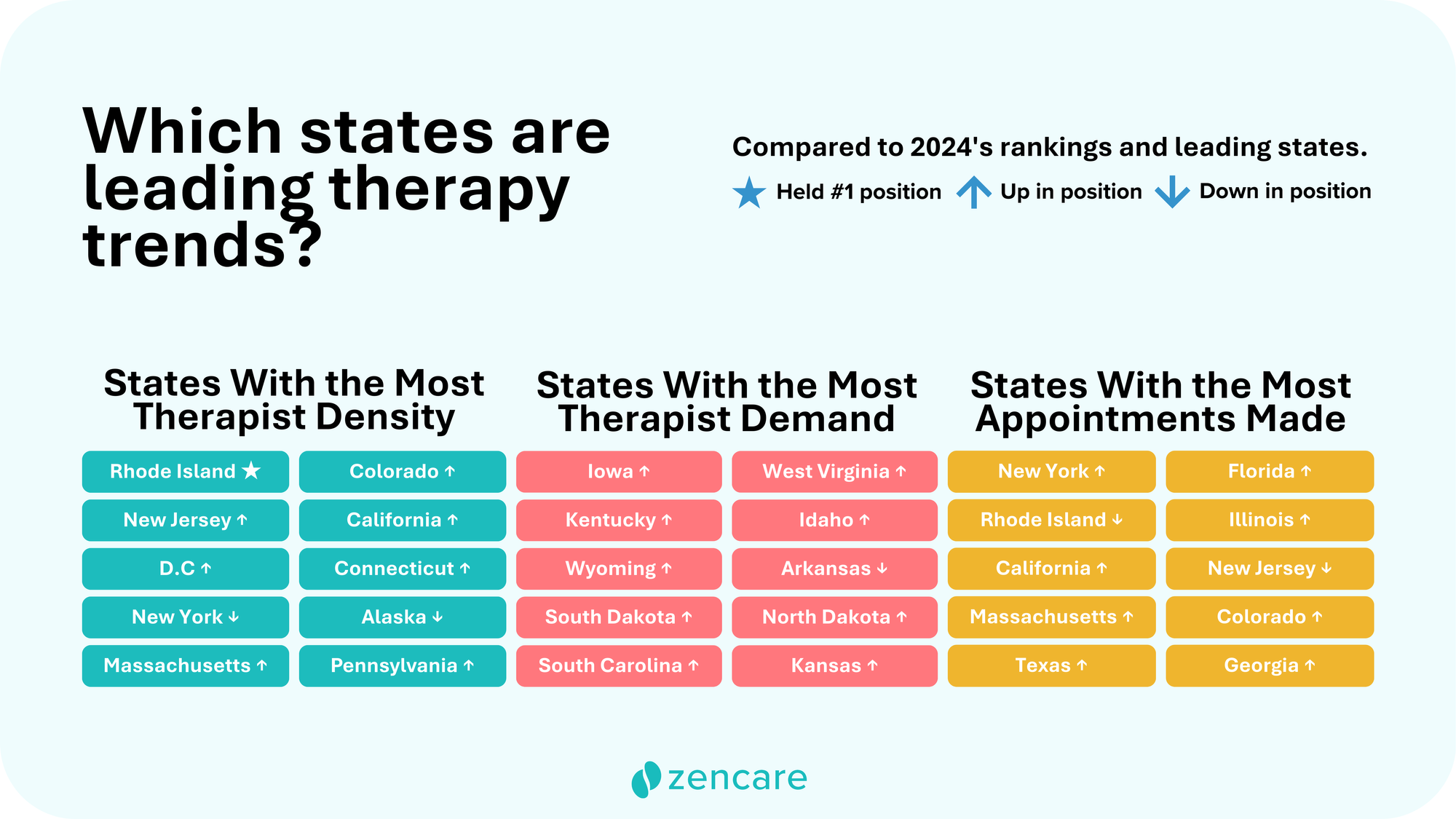
Takeaway: Geography is shaping therapy trends, with urban areas offering more access and engagement. In contrast, rural states face rising demand and limited resources, highlighting the need for investment in telehealth, workforce growth, and culturally informed outreach.
What is the cost of therapy by state?
Therapy costs across the U.S. can vary based on a few factors: location, therapist experience, session format and therapy type. The average cost of therapy sessions can also vary based on an individual’s insurance coverage, and if a therapist offers sessions at a sliding scale.
Most affordable states for therapy
- Louisiana ★
- Ohio ↑
- Michigan ↑
- Alaska ↑
- Florida ↑
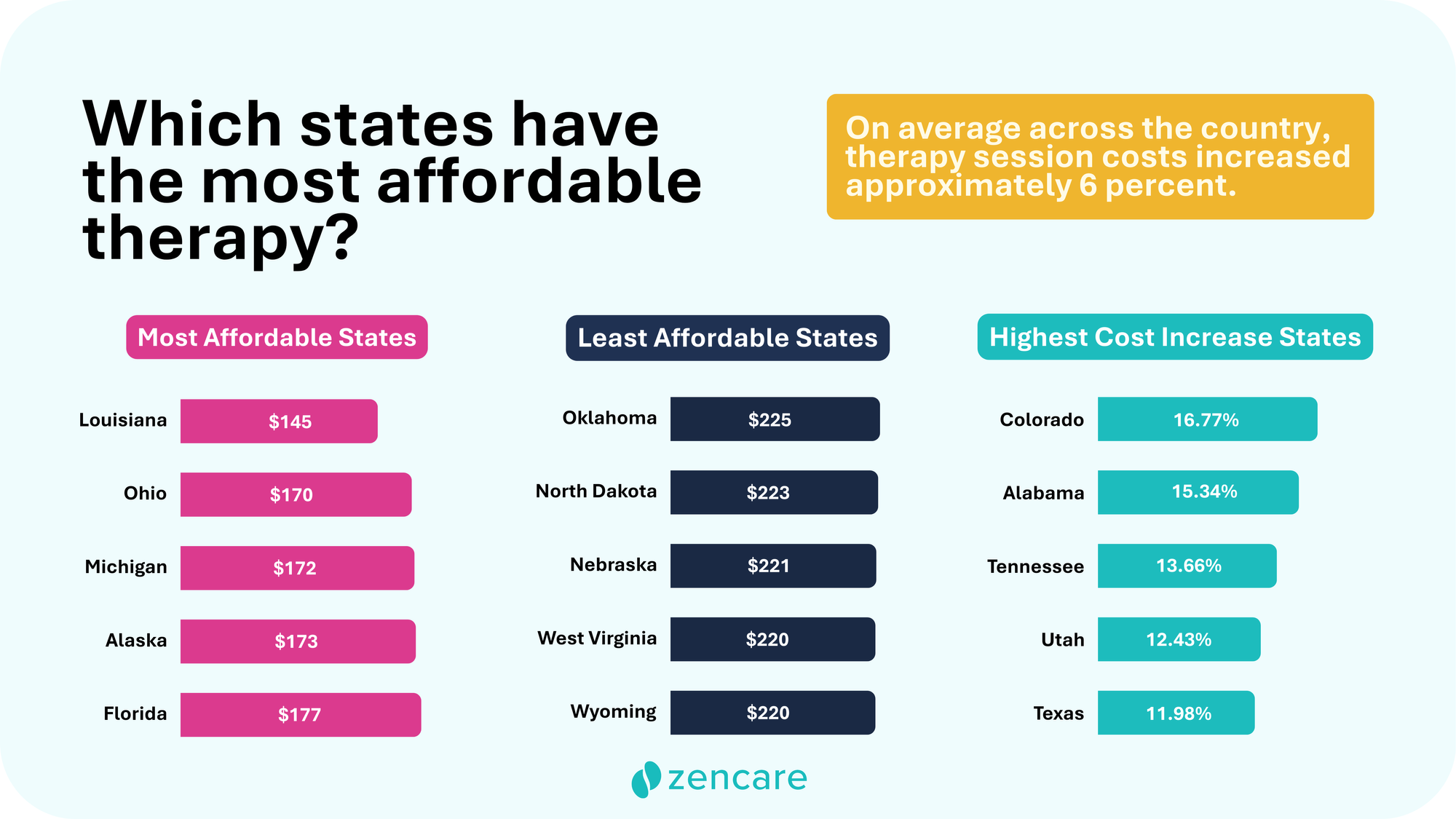
Most expensive states for therapy
- Oklahoma ↑
- North Dakota ↓
- Nebraska ↓
- West Virginia ↓
- Wyoming ↑
States with the highest therapy cost increases
- Colorado: 16.77% increase
- Alabama: 15.34% increase
- Tennessee: 13.66% increase
- Utah: 12.43% increase
- Texas: 11.98% increase
On average, we saw that across the U.S. therapy session costs increased approximately 6 percent. Some state therapy sessions actually reduced on average, namely Florida, Ohio, Michigan, Virginia and Delaware, which are some of the more affordable states to access therapy.
window.addEventListener(“message”,function(a){if(void 0!==a.data[“datawrapper-height”]){var e=document.querySelectorAll(“iframe”);for(var t in a.data[“datawrapper-height”])for(var r,i=0;r=e[i];i++)if(r.contentWindow===a.source){var d=a.data[“datawrapper-height”][t]+”px”;r.style.height=d}}});
Takeaway: Therapy costs vary by state, with some regions seeing sharp increases. As national rates rise, affordability concerns highlight the need for transparency, sliding scale options, and broader insurance access.
Which Zencare resources did you love the most in 2025?
In 2025, Zencare readers were most drawn to content on relationships and practical tools. Of the top 10 blogs, 40% focused on relationship dynamics and 30% on self-help strategies, reflecting a shift toward actionable support and emotional well-being.
We hope these articles inspired you to value and work on your relationships, and make positive strides in your mental health journey.
Dive into the most read articles of 2025!
- Limerence or Love? How to Know the Difference ✚
- 100 Powerful Mental Health Quotes to Uplift You in 2025 ✚
- Square Breathing: How To Reduce Stress Through Breathwork ↑
- How to Heal Your Relationship After a Fight: Why Making Up with your Partner is Important for your Well-being ↓
- How to Practice Radical Acceptance ✚
- A Therapist’s Perspective on the “Let Them” Theory by Mel Robbins ✚
- How to Use an ACT Values Bullseye to Find What’s Important to You ✚
- 20 Therapy Tools to Manage Anxiety & Distress ↑
- How to Stop Being Avoidant In Relationships ↓
- 13 Ways to Build Closer Relationships ✚
What therapy trends do we predict for 2026?
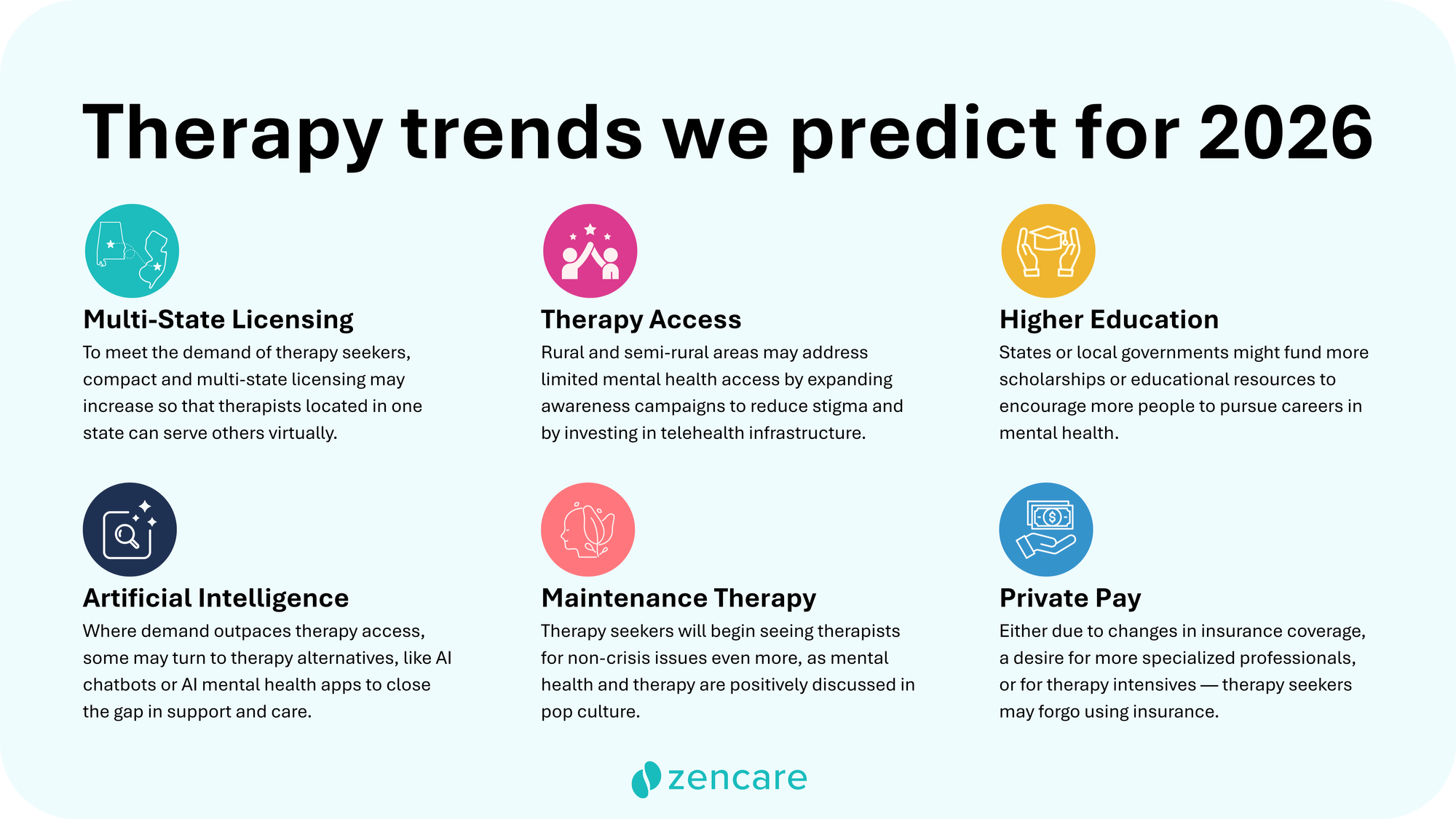
High therapist-to-client ratios and appointment rates are encouraging, but only matter if therapists are available. In response to rising demand, here are Zencare’s key predictions for 2026 therapy trends:
- Multi-State Licensing: To meet the demand of therapy seekers, compact and multi-state licensing may increase so that therapists located in one state can serve others virtually — increasing access to care.
- Therapy Access: Rural and semi-rural areas may address limited mental health access by expanding awareness campaigns to reduce stigma and by investing in telehealth infrastructure, including improving internet connectivity in more remote regions.
- Higher Education: States or local governments might fund more scholarships or educational resources to encourage more people to pursue careers in mental health: psychology, social work, counselling, psychiatry — just to name a few.
- Artificial Intelligence (AI): Therapy seekers who are in states where demand outpaces therapy access may turn to therapy alternatives, like AI chatbots or AI mental health apps to close the gap in support and care.
- Therapy for Maintenance: As therapy becomes more normalized in pop culture, more people will seek support for non-crisis concerns like burnout and life transitions. This shift will make proactive therapy the new norm.
- Private Pay: More people will seek out-of-network therapists, driven by insurance changes, a need for specialized care, or interest in therapy intensives. Many are choosing to pay privately for better fit and flexibility.
Thank you for a great 2025!
As we reflect on the insights and trends from 2025, one thing is clear: people are continuing to show up for their mental health in meaningful, intentional ways. From prioritizing the therapeutic relationship to exploring new therapy types, and from seeking culturally aligned care to turning to therapy for everyday life challenges, this year demonstrated incredible growth in how individuals approach emotional well-being.
Whether you found a therapist, read one of our blog posts, shared a resource with a friend, or simply started thinking more deeply about your mental health — thank you. Your curiosity, courage, and commitment to self-awareness are what make this community so powerful.
We’re grateful to be part of your mental health journey and to provide the tools, therapists, and education that support you along the way. Here’s to more growth, connection, and care in 2026.
You’re not alone, we’re honored to be here with you.